Fragments, Reconstruction, and Space
Fragments entered my work long before I began making art. From engineering and mechanical design to photography and digital intervention, fragmentation became a way of understanding space—and eventually memory, migration, and reconstruction.
Fragments entered my work long before I began making art.
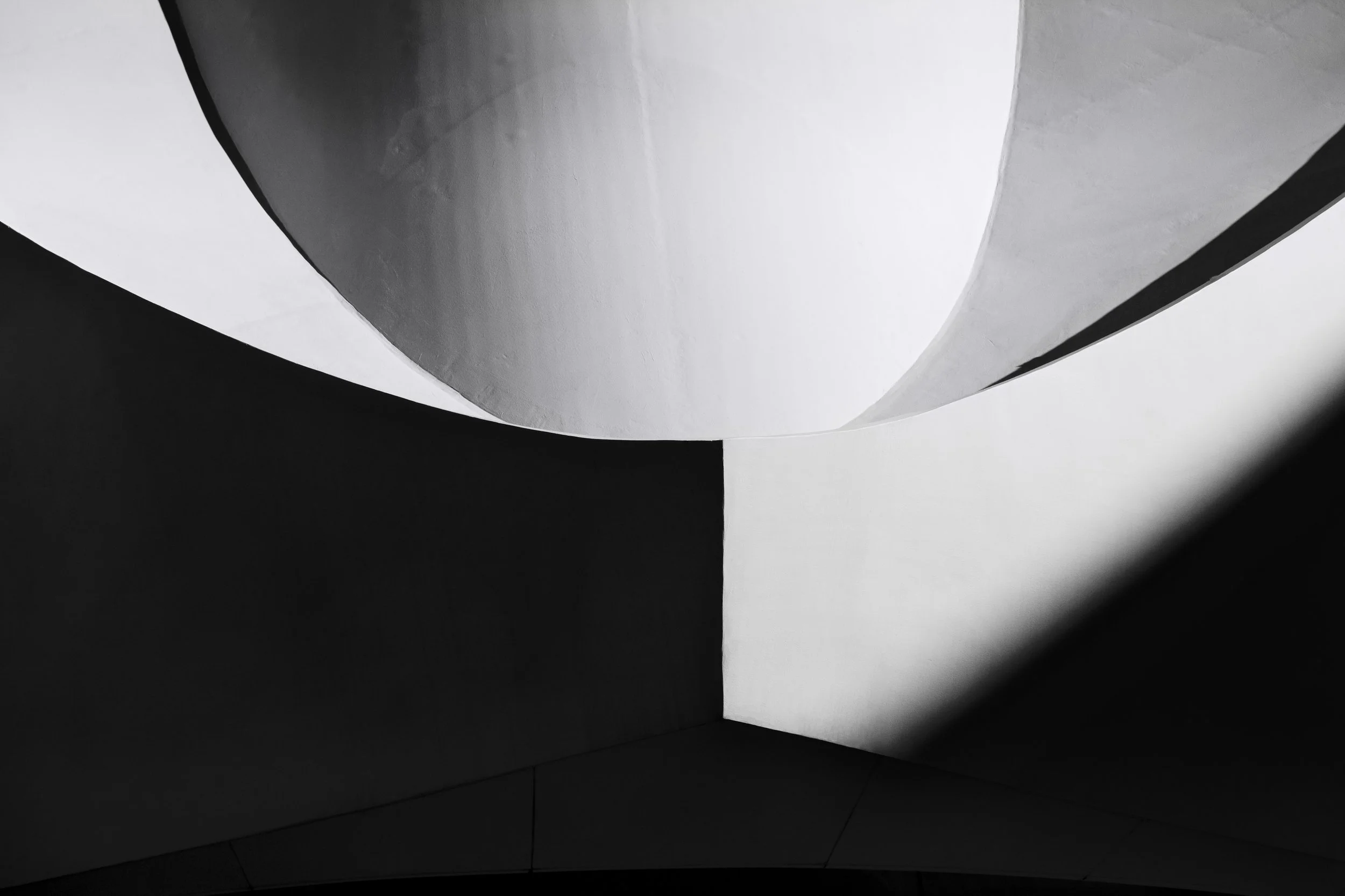
During my engineering studies and later while working as a mechanical designer, I learned to understand complex forms by breaking them apart. To draw the developed surface of an object—whether a machine component, a curved structure, or a building element—I had to imagine its surfaces unfolded and laid flat. I measured forms, separated them into planes, and then reconstructed them. A shape became understandable through fragmentation.
What fascinated me was not only the object itself, but the transformation. A flat surface could be bent, twisted, folded, or assembled into something entirely different. Space was no longer fixed. It could be interpreted from multiple viewpoints and reorganized into new relationships.
Years later, I recognized that the same way of seeing had entered my artwork.
In New York City New Bauhaus, architectural photographs become raw material for reconstruction. Buildings dissolve into geometric planes, shifting perspectives, and intersecting structures. The work explores how we perceive, remember, and reimagine space.
Reconstruction also carries personal meaning.
After leaving Romania and building a life in the United States, I experienced my own process of fragmentation and reassembly. Familiar structures—cultural, personal, and professional—were broken apart and reorganized into something new.
The fragments in my work are therefore both spatial and emotional. They reflect a way of understanding architecture, memory, and identity as forms that are constantly being reconstructed.
Where Broken Began
A reflection on migration, architecture, and reconstruction, and how these experiences shaped the visual and conceptual origins of Broken.
On migration, architecture, and the reconstruction of place
Before Broken became a body of work, it existed as a way of seeing.
Long before I began photographing New York, I learned to understand the world through structure. My father introduced me to architectural drawing, perspective, proportion, and geometry. Later, my training in mechanical engineering taught me to think through systems: how structures preserve balance and respond when forces act upon them.
I was born in Bucharest and came to the United States during the unsettled years following the fall of communism in Romania. The political and economic crisis of that period—including the violent confrontations of the Mineriads in the early 1990s—shaped my decision to leave.
Migration subsequently became a lasting way of understanding the world. To migrate is to enter a structure that already exists while carrying another place within you. It involves uncertainty and loss, but also adaptation, contribution, and the possibility of rebuilding. The places we enter change as well, absorbing the histories, memories, and presence of those who pass through them.
During the pandemic, when New York's streets became unusually quiet, I returned intensely to photographing architecture. I researched the city's history and architectural development, looking at buildings not simply as objects but as witnesses to changing periods and populations. This investigation developed into Shifting Architecture, a project I pursued from 2020 to 2023.
Gradually, architecture appeared less permanent to me. Buildings may endure, but the city around them is continuously transformed. People arrive and leave. Neighborhoods change. Structures are repurposed, reflected, obscured, demolished, or surrounded by something new.
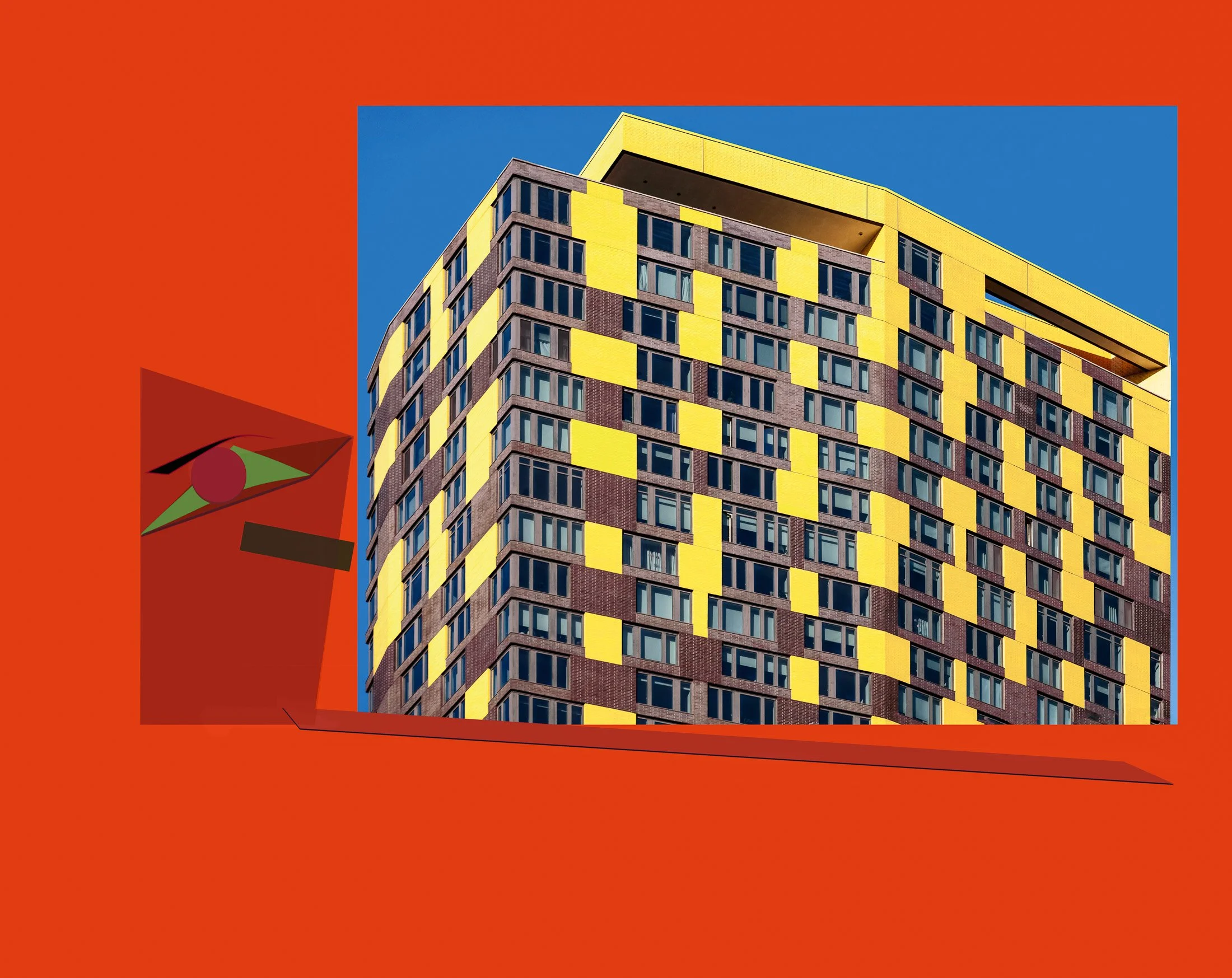
Eventually, photography alone could no longer express what I wanted to explore. I began digitally intervening in my architectural photographs—fragmenting, shifting, and reorganizing parts while allowing the original structure to remain present.
That process became Broken.
The interventions do not illustrate migration literally. Instead, migration informs how I understand structures that appear fixed but are continually altered by movement, memory, history, and human presence. Geometry becomes both structure and disruption; architectural order is interrupted and reconstructed.
For me, migration is a catalyst for transformation, and architecture witnesses it.
Broken brings that instability into the image itself. The photograph begins with an existing structure, but its order shifts. Parts are displaced and reassembled. What initially appears broken may instead be becoming something else.
Perhaps that is the personal origin of Broken: not destruction, but the recognition that permanence is often an illusion—and that reconstruction can itself become a form of continuity.
Roxana Gheorghe
Visual artist based in New York City exploring architecture, migration, memory, and transformation.
View Portfolio